Blog · Archive
The Definitive Guide to Virtual CSR Roofing Scheduling
Learn how a virtual CSR handles roofing inspection scheduling for retail and insurance leads with 24/7 CRM-integrated routing and follow-up protocols.

Why Every Roofing Company Needs to Master Remote Inspection Scheduling
Understanding how a virtual CSR handles roofing inspection scheduling could be the difference between winning a job and losing it to the competitor who picked up the phone first.
Here's the quick answer:
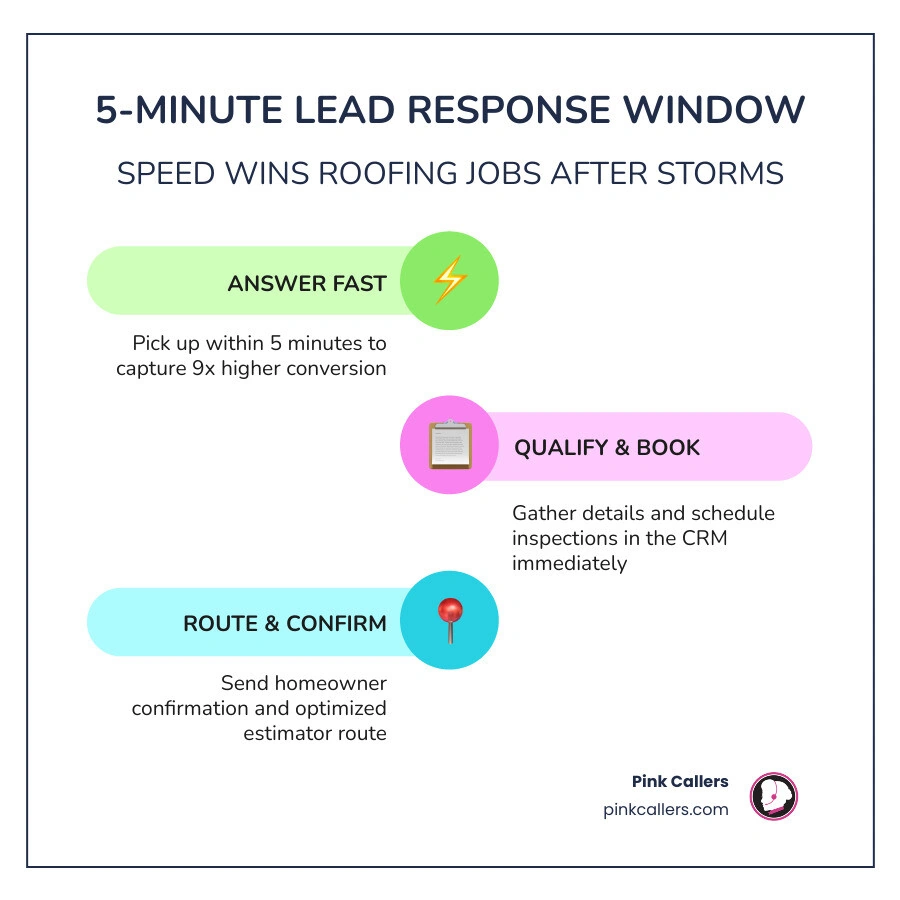
- Answer the call immediately — within minutes, day or night, including weekends and storm surges
- Qualify the lead — determine urgency (active leak vs. routine estimate), job type (insurance claim vs. retail), and property details
- Collect key information — homeowner name, address, roof age, damage description, insurance carrier, and claim number if applicable
- Book the inspection in real time — directly into the CRM (JobNimbus, AccuLynx, or ServiceTitan) while the homeowner is still on the phone
- Route to the right estimator — based on territory, availability, and job priority to minimize drive time
- Send confirmation — a text and email with pre-inspection instructions so the homeowner knows what to expect
- Follow up — confirm 24 hours before the appointment and re-engage any no-shows
When a storm rolls through a market overnight, roofing companies can go from 10 calls a week to 200 calls in 48 hours. A small in-house team simply cannot absorb that volume. Calls go to voicemail. Homeowners hang up. They call the next contractor on the list.
The numbers make this painfully clear. Research shows that 80% of callers hang up the moment they hit voicemail and move straight to a competitor. Leads contacted within 5 minutes convert at 9 times the rate of leads reached after 30 minutes. And a single missed inbound call during storm season can represent $50,000–$100,000 in lost annual revenue for a roofing company running 3–5 crews.
This is the core problem virtual CSRs solve — not just answering phones, but owning the entire scheduling pipeline from first contact to confirmed appointment, at any hour, at any call volume.
Lead Qualification and Triage Protocols

When an inbound call or web lead hits our system, a virtual customer service representative (CSR) does not simply look for the next open slot on your calendar. Instead, they execute a highly structured qualification and triage protocol. This step is critical because treating every call with the exact same level of urgency is a recipe for operational chaos.
Our virtual CSRs are trained to listen for specific "emergency keywords" such as active leak, water dripping through ceiling, or tree limb on roof. If a homeowner in Nashville or Charlotte calls at 2:00 AM with water actively pouring into their living room, the CSR recognizes this as a critical emergency. Instead of booking a routine inspection for next Tuesday, they immediately trigger emergency protocols, which may include dispatching emergency tarping services or routing the call directly to your on-call field manager.
For non-emergencies, the qualifying process focuses on establishing the viability and value of the lead. The CSR systematically asks targeted questions to determine:
- Property Ownership: Confirming the caller is the homeowner (and not a tenant) who has the authority to sign a contract.
- Scope of Work: Identifying if the caller is looking for a full roof replacement, a minor repair, gutter installations, or a routine maintenance inspection.
- Urgency Level: Pinpointing when they want the work completed and if they have active water damage.
By executing this thorough intake, the virtual CSR ensures your high-value sales reps and estimators are not wasting time driving out to properties that do not qualify. This structured approach to Roofing Appointment Scheduling keeps your pipeline clean, your team focused on closing, and your customers feeling heard from the very first ring. This seamless blend of technology and professional intake is a core component of our Virtual CSR Services.
Differentiating Retail Customers from Insurance Claims
A critical junction in the lead qualification process is determining how the project will be funded. A virtual CSR must immediately differentiate between a retail/cash customer and an insurance claim inspection, as these two paths require completely different scheduling workflows and documentation.
For retail customers—homeowners looking to replace an aging roof out of pocket—the CSR focuses on gathering aesthetic and material preferences (e.g., architectural shingles versus metal roofing) and confirming their budget or interest in financing.
For insurance claim inquiries, the intake process must be highly structured. The virtual CSR is trained to collect:
- The Insurance Carrier Name & Policy Number: Crucial data points for your estimators before they step onto the roof.
- The Date of the Storm Event: Verifying when the wind or hail damage occurred to ensure it falls within the carrier's filing window.
- The Claim Number: If the homeowner has already filed a claim, this number is documented and logged directly into your CRM.
- Adjuster Meeting Coordination: If an insurance adjuster has already been assigned and scheduled to visit the home, the virtual CSR coordinates your estimator’s inspection to align with that exact window. Having your estimator present during the adjuster’s walkthrough dramatically increases the approval rate of the claim.
By capturing these details upfront, we ensure your team is fully prepared to handle the unique demands of Roofing insurance projects from day one.
How a Virtual CSR Handles Roofing Inspection Scheduling
Once a lead is qualified, the virtual CSR transitions to the core task: booking the inspection. This is where remote scheduling logistics become an art form. Using a professional Contractor Scheduling Service ensures that appointments are booked with maximum precision, keeping your field team moving efficiently without burning out.
Every booking requires a balance of homeowner availability, estimator drive time, and territory management. Our virtual CSRs act as air traffic controllers for your sales team, ensuring that calendars are tightly managed, driving routes are optimized, and homeowners receive clear, professional pre-inspection instructions.
Step-by-Step: How a Virtual CSR Handles Roofing Inspection Scheduling for Retail Clients
Scheduling a retail roofing inspection is a collaborative process designed to build trust with the homeowner while maximizing your sales team's closing potential. Here is exactly how a virtual CSR executes this workflow:
- Verify the Location and Service Area: The CSR references your service area maps in real time to ensure the property is within your coverage zone in cities like Fort Worth, San Diego, or Jacksonville.
- Cross-Reference Sales Rep Skills: If a homeowner specifically requests a commercial TPO inspection or a premium slate roof estimate, the CSR matches the lead with the estimator who specializes in that specific job type.
- Present Strategic Booking Options: Rather than asking, "When are you free?"—which often leads to scheduling conflicts—the CSR offers two specific, optimized time slots that fit naturally into your team's existing travel routes.
- Confirm Homeowner Attendance: For retail estimates, it is highly recommended that all decision-makers are present. The CSR politely explains the value of having both spouses or co-owners there to discuss material samples and financing options.
- Log the Appointment and Dispatch Instructions: The appointment is booked directly into your CRM, and a comprehensive guide is referenced to ensure all company-specific scheduling rules are met. For a deeper look at these best practices, consult our Best Roofing Virtual Receptionist Guide.
Insurance Claims: How a Virtual CSR Handles Roofing Inspection Scheduling After Storms
When a severe weather event strikes, the scheduling workflow must shift into high gear. Homeowners are stressed, insurance adjusters are on tight schedules, and your phone lines are ringing off the hook.
In a post-storm scenario, the virtual CSR prioritizes speed and documentation. When scheduling an inspection for an insurance-driven lead, the CSR coordinates directly around the insurance adjuster's schedule if a meeting has already been set. If the adjuster has not yet been scheduled, the CSR books a "pre-loss inspection" for your team to document the damage first, helping the homeowner prepare their claim.
During these high-volume events, the CSR acts as a stabilizing force. They reassure the homeowner, explain the step-by-step insurance process, and schedule emergency tarping if active leaks are threatening the home's interior. This rapid, empathetic response secures the lead before they can call another contractor. To understand how to prepare your business for these seasonal surges, read our Roofing Virtual Receptionist Complete Guide.
CRM Integrations and Territory Routing Logistics
To manage this level of scheduling volume without errors, virtual CSRs must operate directly inside your business's core software stack. Manual scheduling—using paper calendars, personal text messages, or disconnected spreadsheets—leads to double-bookings, missed appointments, and massive amounts of wasted drive time.
By integrating with industry-specific CRMs like JobNimbus, AccuLynx, and ServiceTitan, virtual CSRs can book appointments in real time, view live estimator locations, and automate homeowner communications instantly.
| Scheduling Feature | Manual Scheduling | Integrated CRM Routing (JobNimbus, AccuLynx, ServiceTitan) |
|---|---|---|
| Booking Speed | Slow; requires manual texting or calling back and forth. | Instant; booked directly into the live calendar during the initial call. |
| Data Accuracy | High risk of spelling errors, lost notes, and missed claim numbers. | Low risk; structured intake forms enforce mandatory data fields. |
| Route Optimization | Estimators drive across town, increasing fuel costs and wear-and-tear. | Smart routing places appointments in geographical clusters. |
| Homeowner Notifications | Often forgotten or delayed, leading to higher no-show rates. | Automated SMS and email confirmations sent instantly upon booking. |
| Storm Surge Scalability | Office staff gets overwhelmed; calls go directly to voicemail. | Scalable; virtual CSRs handle unlimited simultaneous calls. |
Our Roofing Service Call Center is built around these integrations, ensuring that every call taken is immediately translated into clean, actionable data in your CRM.
Real-Time Calendar Syncing
Real-time calendar syncing is the secret weapon of an efficient roofing operation. When our virtual CSRs use your CRM, they have instant visibility into your estimators' schedules. This prevents the nightmare of double-bookings while ensuring that your sales reps have adequate "buffer time" between appointments.
Buffer times are calculated based on local traffic patterns in your specific market—whether that is navigating the highways of Jacksonville, the afternoon rush in Charlotte, or the rural routes surrounding Middleburg, Virginia. We build in travel windows and prep time so your estimators arrive relaxed, on time, and fully prepared to win the job. To see how this operational efficiency directly translates to business growth, explore How Virtual CSRs Help Roofing Companies Grow.
Frequently Asked Questions About Roofing CSRs
How do virtual CSRs handle after-hours and weekend storm calls?
Storms do not operate on a 9-to-5 schedule. In fact, most homeowners discover roof damage and active leaks in the evening, over the weekend, or in the early hours of the morning. If they call your office and get a voicemail, they will hang up and call the next contractor.
Our virtual CSRs provide true 24/7/365 coverage. During peak storm seasons, we handle after-hours and weekend calls with the exact same level of professionalism as a Monday morning. When a call comes in at midnight, our team qualifies the lead, triages the damage, schedules the inspection, and inputs the data directly into your CRM so your team can hit the ground running at sunrise. For a complete breakdown of how to set up this round-the-clock protection, check out our 24/7 Roofing Virtual Receptionist Guide.
What follow-up protocols are used for missed or rescheduled inspections?
A missed appointment is not a dead lead; it is simply an unfinished conversation. If a homeowner misses an inspection or needs to reschedule, our virtual CSRs execute a multi-touch follow-up protocol to keep them in your sales funnel:
- Immediate Text-Back: If an estimator reports a "no-show," the CSR immediately sends a polite text message offering to reschedule.
- Follow-Up Calls: We make structured follow-up calls at 24-hour, 72-hour, and 5-day intervals to re-engage the homeowner.
- Multi-Channel Outreach: We combine phone calls, text messages, and emails to ensure we reach the homeowner on their preferred channel.
This persistent, professional follow-up prevents leads from falling through the cracks and maximizes your return on marketing spend. Our Fractional CSR model allows you to scale this follow-up support up or down based on your seasonal volume.
What metrics track the effectiveness of virtual inspection scheduling?
To ensure your scheduling pipeline is running at peak efficiency, we recommend tracking the following key performance indicators (KPIs):
- Speed-to-Lead: The average time it takes to respond to an inbound web form or call (our goal is always under 5 minutes).
- Booking Conversion Rate: The percentage of qualified inbound calls that successfully result in a scheduled inspection.
- Data Accuracy Rate: The completeness of CRM files, including homeowner details, roof age, and insurance claim numbers.
- No-Show Rate: The percentage of scheduled inspections where the homeowner is not present (kept low through automated confirmation sequences).
Conclusion
Mastering remote inspection scheduling is no longer an optional luxury for modern roofing companies—it is a baseline requirement for survival and growth. By leveraging a professional virtual CSR team, you ensure that every inbound lead is captured within minutes, qualified with precision, and booked directly into your CRM with optimized routing.
At Pink Callers, we provide a unique Human + AI Hybrid model that pairs our advanced voice AI assistant, "pAIge," with highly trained, empathetic, and ServiceTitan-certified customer service representatives. Operating 24/7/365, we handle your calls, schedule your inspections, and integrate seamlessly with your CRM so you never miss another high-value storm lead or retail replacement opportunity.
Ready to eliminate missed calls, optimize your estimators' calendars, and scale your business? Scale your roofing business with Pink Callers today.
Keep reading
More from the blog
How We Handle Multi-Trade Dispatching for HVAC and Plumbing Combos
Misrouting an ambiguous 'no hot water' call wastes highly skilled technicians' time. We break down the exact intake triage rules that successfully separate plumbing from HVAC tickets.
Read → September 14, 2026Outsourced Customer Service vs Hiring a Local Temp Agency
Losing a dispatcher right before the fall heating rush can overwhelm any contractor. Compare the operational impact of a specialized call center versus a local temp worker to protect your revenue.
Read → September 11, 2026Transitioning Phone Scripts for Northeast Fall Boiler Prep
The first freeze brings a sudden wave of urgent no-heat calls that can easily overwhelm untrained CSRs. Prepare your dispatch board by strategically updating your front-office triage process.
Read →