Blog · Archive
Everything You Need to Know About BPO for Home Services
Discover business process outsourcing for home service contractors: boost efficiency, manage leads, integrate CRM, and scale with 24/7 support.

What Business Process Outsourcing Means for Home Service Contractors
Business process outsourcing for home service contractors is the practice of delegating non-core business functions — like call handling, scheduling, and admin work — to a specialized external team so you can focus on the field work that actually grows your business.
Here's a quick breakdown of what that looks like in practice:
- What it is: Hiring an outside provider to manage tasks like customer calls, appointment booking, CRM updates, invoicing, and lead follow-up
- Who it's for: HVAC, plumbing, electrical, roofing, and other home service businesses of any size
- Why it matters: Contractors spend an estimated 10–15 hours per week on admin tasks that could be handled by a trained external team
- Key benefits: 24/7 coverage, fewer missed leads, lower overhead than full-time staff, and scalability during peak seasons
- Common functions outsourced: Inbound call answering, scheduling, dispatching, CRM management, lead follow-up, and after-hours support
If you run a home service business, you already know the problem. Calls come in while your technicians are on the job. Leads go cold because no one followed up. Your schedule gets messy during the summer rush or after a major storm. And somewhere in between managing your crew, your materials, and your customers, the admin work piles up.
That's exactly the gap that business process outsourcing is built to fill. Rather than hiring more full-time office staff — with all the overhead that comes with it — contractors are increasingly turning to specialized BPO providers who understand the home services industry, integrate with tools like ServiceTitan, and can answer calls around the clock.
The results are real. Research shows that outsourcing can improve operational efficiency by up to 45%, and businesses using automated admin workflows report spending 30–50% less time on manual tasks. Meanwhile, 88% of callers won't try again if their first call goes unanswered — a stat that hits hard when every missed call is a potential job lost to a competitor.
Core Benefits of Business Process Outsourcing for Home Service Contractors
In the home services world, your reputation is built on responsiveness. When a homeowner has a leaking pipe or a broken AC in the middle of a heatwave, they aren't going to wait for a call back. They want a real person, right now.
One of the primary benefits of business process outsourcing for home service contractors is achieving 24/7 availability without burning out your internal team. By using a BPO model, you ensure that every inquiry is met by a professional voice, which directly impacts your lead conversion rates. Statistics show that responding to leads in under two minutes significantly increases the likelihood of winning the job.
Beyond just answering the phone, BPO helps with revenue recovery. Many contractors "leak" profit because they fail to follow up on old estimates or struggle to collect final payments. An outsourced team acts as a persistent extension of your office, reaching out to customers to close loops that your field technicians simply don't have time for. This systematic approach eliminates operational bottlenecks like delayed invoicing or disorganized scheduling that often plague growing companies. More info about home services can help you understand how these efficiencies apply to your specific trade.
Managing Seasonal Demand with BPO for Home Service Contractors
Every contractor knows the "feast or famine" nature of the industry. HVAC companies face massive spikes in the summer, while roofing and plumbing businesses often deal with sudden surges following major storms. Handling these peaks in-house usually means either overstaffing during slow months or missing calls during busy ones.
BPO provides the scalability needed to navigate these fluctuations. You can flex your support up or down based on real-time demand. For example, during a peak season, an outsourced team can handle the overflow of service calls and emergency dispatching, ensuring your technicians stay focused on the billable work. Plumbing support services are particularly effective here, as they allow for rapid response to emergencies regardless of the time of day.
Enhancing Brand Consistency through Professional Outsourcing
A common fear among contractors is that an outside team won't "sound" like their company. However, professional BPO providers prioritize brand consistency by working from your specific brand guidelines and communication standards.
By establishing clear protocols and using industry-trained representatives, the customer experience remains seamless. The homeowner shouldn't be able to tell the difference between your office manager and your outsourced partner. This level of quality control ensures that every interaction reinforces your company’s professional image. To see why this matters, you can explore why professional support matters for long-term growth.
Key Functions to Outsource in the Home Services Industry
Deciding what to delegate is the first step toward a more efficient business. While you handle the hammers and wrenches, a BPO partner handles the headsets and keyboards.
| Function | In-House Administration | Outsourced BPO Support |
|---|---|---|
| Availability | Usually 8 AM - 5 PM | 24/7/365 Coverage |
| Cost Structure | Fixed (Salary + Benefits) | Scalable/Fractional |
| Training | Time-consuming for owner | Pre-trained in industry tools |
| Lead Capture | Missed calls during jobs | 90%+ Booking rates |
| Software | Manual data entry | Real-time CRM integration |
The most common tasks to outsource include inbound call handling, appointment scheduling, and comprehensive lead management. For specialized trades, such as HVAC support, this includes emergency dispatching and maintenance plan reminders.
CRM Management and Software Integration
Modern home services rely on Field Service Management (FSM) software. Whether you use ServiceTitan, Jobber, or Housecall Pro, your BPO partner must be able to work within your existing ecosystem.
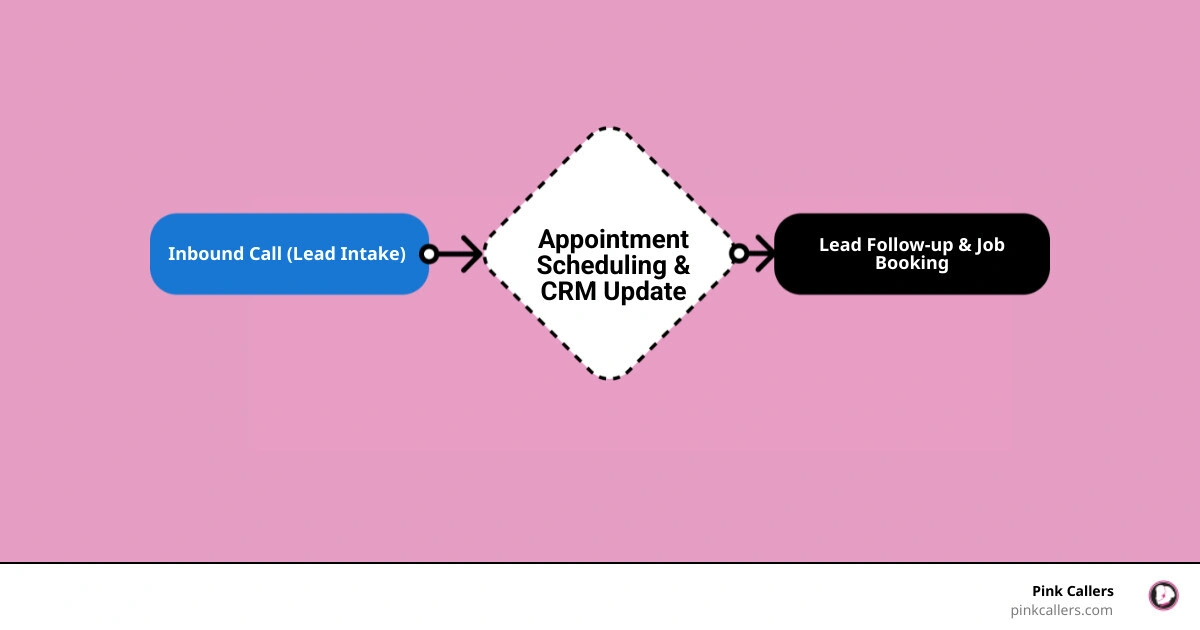
Effective CRM management services ensure that when a call is taken, the job is created, the customer profile is updated, and the technician is notified in real-time. This eliminates the "double-entry" headache where you have to move notes from a notepad into your software at the end of a long day.
Lead Follow-up and Revenue Recovery
Did you know that 88% of customers won't call back if their first attempt goes to voicemail? Outsourcing ensures that never happens. But BPO goes beyond inbound calls; it includes proactive outbound calling.
If you have a stack of unsigned estimates from last month, an outsourced team can perform contractor lead follow-up to see if the customer is ready to move forward. For HVAC specifically, HVAC lead management can involve calling past customers to schedule their spring or fall tune-ups, creating a steady stream of recurring revenue.
Selecting the Right Model for Business Process Outsourcing for Home Service Contractors
Not all outsourcing is created equal. When looking at business process outsourcing for home service contractors, you generally have three choices:
- Onshore Models: U.S.-based teams that share your time zone and cultural nuances. This is often preferred for home services where local trust is paramount.
- Offshore/Nearshore: Teams located in other countries. While often cheaper, they may face challenges with local terminology or time zones.
- Virtual Assistants vs. Dedicated Teams: An individual VA might handle a few tasks, but a dedicated team provides broader coverage and reliability, ensuring that if one person is sick, your phones still get answered.
For technical trades like the electrical industry support sector, having a team that understands the difference between a panel upgrade and a simple outlet repair is crucial.
The Role of AI and Automation in BPO for Home Service Contractors
As we move through 2026, the most effective BPO solutions use a hybrid model. This involves "Human + AI" collaboration. AI can handle the initial sorting of calls or provide instant answers to basic questions, while human representatives step in for complex scheduling or empathetic customer service.
In the roofing industry solutions space, for example, AI can help track storm patterns and automatically trigger outbound calls to customers in affected areas, while the human team handles the actual appointment booking and insurance details.
Ensuring Quality Control and Data Security
Entrusting your customer data to a third party is a big step. You must ensure your BPO provider follows strict security standards. Look for providers that are PCI compliant (for handling payments) and follow SOC 2 standards.
Regular quality assurance (QA) checks, where calls are monitored and scored, ensure that the service level remains high. This transparency allows you to see exactly how your customers are being treated without having to listen to every call yourself. You can see the breadth of how this applies across different industries served to see how security protocols are standardized.
Frequently Asked Questions about BPO for Contractors
Is BPO suitable for small home service businesses?
Absolutely. In fact, small businesses often benefit the most. If you are a "man in a van" or have a small crew, you can't afford to be on the roof and on the phone at the same time. Fractional support allows you to pay only for what you need, giving you the professional appearance of a much larger company. This allows for smarter resource allocation as you move through different growth stages. Our FAQ page covers more on how small teams can get started.
How does BPO integrate with existing field service software?
Most modern BPO providers use API connections to sync directly with your software. For instance, being ServiceTitan certified means the outsourced team can manage your real-time calendar, dispatch technicians, and update job statuses exactly as an in-house dispatcher would. To learn more about how we handle these technical connections, you can read about our process.
What are the common challenges in implementing BPO?
The biggest hurdle is usually the initial onboarding. It takes time to document your specific processes and "voice." However, a good partner will have a structured onboarding timeline (often 30–45 days) to ensure a smooth transition. Clear communication and a willingness to treat the outsourced team as a true partner rather than just a "vendor" are key to overcoming change management issues. Specialized contractor support services are designed specifically to minimize these growing pains.
Conclusion
The landscape of the home services industry is changing. To stay competitive in 2026, contractors must find ways to work smarter, not just harder. Business process outsourcing for home service contractors offers a path to scaling your business without the traditional headaches of hiring, training, and managing a large internal office staff.
At Pink Callers, we specialize in a hybrid AI-human model that provides the best of both worlds: the efficiency of technology and the empathy of U.S.-based, ServiceTitan-certified professionals. Whether you are in HVAC, plumbing, or electrical, we provide the 24/7 coverage you need to never miss a lead again.
Ready to see how we can plug the profit leaks in your business? Sign up for a Free Trial today and experience the difference that professional support can make.
Keep reading
More from the blog
How We Handle Multi-Trade Dispatching for HVAC and Plumbing Combos
Misrouting an ambiguous 'no hot water' call wastes highly skilled technicians' time. We break down the exact intake triage rules that successfully separate plumbing from HVAC tickets.
Read → September 14, 2026Outsourced Customer Service vs Hiring a Local Temp Agency
Losing a dispatcher right before the fall heating rush can overwhelm any contractor. Compare the operational impact of a specialized call center versus a local temp worker to protect your revenue.
Read → September 11, 2026Transitioning Phone Scripts for Northeast Fall Boiler Prep
The first freeze brings a sudden wave of urgent no-heat calls that can easily overwhelm untrained CSRs. Prepare your dispatch board by strategically updating your front-office triage process.
Read →